How to Know If You Have a Cracked Tooth
You bite into something and suddenly feel a sharp jolt.
It lasts only a second, so you ignore it. A few days later, the same tooth hurts again when you chew. Cold water makes it sting. Then, oddly enough, you cannot quite point to exactly where the pain is coming from.
This is one of the frustrating things about a cracked tooth. The crack may be tiny, difficult to see and still capable of causing surprisingly uncomfortable pain.
A cracked tooth does not always look broken. Sometimes there is no obvious damage when you look in the mirror. The warning signs may instead appear when you bite, release your bite, or have something very hot or cold.
And while some tiny enamel cracks are harmless, a deeper crack can worsen over time and eventually affect the nerve inside the tooth.
So how can you tell if your tooth might be cracked? What does cracked tooth pain feel like? Can a cracked tooth heal by itself? And when should you treat it as a dental emergency?
Let’s take a closer look.
What Is a Cracked Tooth?
A cracked tooth is a tooth that has developed a fracture through one or more of its layers.
The important thing is that not all cracks are equally serious.
You may have noticed fine lines on your teeth and assumed they were cracks. They could simply be craze lines, which are tiny cracks limited to the outer enamel. These are common in adult teeth and usually do not cause pain.
A deeper crack is different.
When a crack extends into the dentine or towards the pulp, the sensitive tissue inside the tooth can become irritated. With continued pressure from chewing, the crack can gradually become more problematic.
This is why the appearance of a crack alone does not tell you how serious it is.
Sometimes, the way your tooth behaves is a bigger clue than what you can see.
What Does a Cracked Tooth Feel Like?
The classic symptom is not necessarily constant toothache.
Instead, you may experience a sharp, sudden pain when biting down. Sometimes the pain happens when you release your bite, rather than when you first bite into the food.
You might also notice:
- Sharp pain while chewing
- Pain that comes and goes
- Sensitivity to cold drinks or hot foods
- Pain when eating something sweet
- A feeling that one particular tooth is “not right”
- Pain when biting on a specific part of the tooth
- Swelling around the tooth in some cases
- Toothache that becomes more frequent over time
The American Association of Endodontists notes that cracked teeth can cause erratic pain when chewing and sudden pain with very hot or cold temperatures. The pain may also come and go, making the affected tooth difficult to identify.
That unpredictability can be confusing.
You might feel perfectly fine in the morning, eat lunch without any problem, and then experience a sharp pain when you bite into something later in the day.
That does not mean the problem is imaginary or insignificant.
Why Does a Cracked Tooth Hurt When You Bite?
To understand the pain, it helps to think about what happens when you chew.
Your teeth are built to withstand considerable pressure. But when a tooth has a crack, biting can cause the damaged parts of the tooth to flex or move slightly.
That movement can irritate the pulp inside the tooth, which contains nerves and blood vessels.
This can produce the characteristic sharp pain associated with cracked teeth. Over time, continued irritation may damage the pulp further.
This is also why some people notice pain when they release their bite.
The tooth is being compressed and then the pressure changes as you let go. If that movement stresses the cracked area, you may feel a sudden jolt of pain.
Not everyone with pain when biting has a cracked tooth, though. Decay, a loose filling and problems affecting the pulp can cause similar symptoms.
A dentist needs to determine the actual cause.
7 Signs That Your Tooth May Be Cracked
You cannot reliably diagnose a cracked tooth at home, but certain patterns deserve attention.
1. You get a sharp pain when biting
This is one of the most common clues.
You may notice that a particular tooth hurts when you bite into something hard or chewy.
Sometimes you can only reproduce the pain by biting in a specific way.
If the same tooth repeatedly causes pain while chewing, don’t simply assume that it is tooth sensitivity.
2. The pain happens when you release your bite
This can be particularly frustrating.
You bite down and everything seems fine. Then, as you release the pressure, you feel a sudden sharp pain.
A cracked tooth can produce this type of response because the movement of the cracked tooth structure can irritate the tissues inside it.
It is not proof of a crack by itself, but it is a symptom worth telling your dentist about.
3. Cold suddenly hurts one tooth
A cracked tooth can become sensitive to cold drinks, ice cream or other temperature changes.
You may notice that the sensitivity is concentrated in one tooth rather than affecting your entire mouth.
Temperature sensitivity can also happen with tooth decay, exposed dentine and other dental problems, so the trigger alone cannot identify a crack.
What matters is the pattern.
4. The pain comes and goes
This is another reason cracked teeth can be difficult to diagnose.
You may have no pain for hours or even days before something triggers it again.
The American Association of Endodontists specifically notes that pain from cracked teeth may be intermittent and difficult to localise.
If a tooth repeatedly gives you unexplained bursts of pain, it deserves an examination even if it feels normal between episodes.
5. You cannot tell which tooth hurts
It sounds strange, but this happens.
You know something hurts somewhere on one side of your mouth, but you cannot identify the exact tooth.
Pain from a cracked tooth can sometimes be difficult to locate, particularly when the crack is small.
This is one reason dentists may need to test several teeth before finding the source.
6. A tooth becomes painful after biting something hard
Ice, hard sweets, popcorn kernels and other hard objects can put considerable force on teeth.
A sudden pain after biting something hard does not automatically mean your tooth has cracked, but it is a reason to pay attention to what happens afterwards.
If the tooth continues to hurt when chewing or becomes sensitive to temperature, arrange a dental examination.
7. The tooth becomes painful without an obvious trigger
A deeper crack can eventually affect the pulp.
At that stage, the tooth may start hurting on its own rather than only when you eat or drink something.
An untreated crack can also allow bacteria to reach the pulp and potentially lead to infection.
That is a different situation from a harmless enamel craze line and should be assessed promptly.
What Causes a Tooth to Crack?
Sometimes there is an obvious event.
You bite down on something unexpectedly hard and immediately feel pain.
But cracked teeth can also develop gradually.
Biting hard foods or objects
Ice is a common example, but it is not the only one.
Hard sweets, unpopped popcorn kernels and other very hard foods can place significant force on a tooth.
Using your teeth to open packets or bite objects can also put unnecessary stress on them.
Your teeth are designed for eating, not as tools.
Teeth grinding and clenching
If you grind or clench your teeth, your teeth can repeatedly experience high levels of pressure.
Over time, this may contribute to tooth wear and increase the risk of cracks.
Some people know they grind their teeth. Others only discover it after a dentist notices worn tooth surfaces.
Morning jaw soreness, headaches or visibly worn teeth can sometimes accompany grinding.
An injury
A blow to the mouth can crack a tooth.
This may happen during sports, a fall, an accident or any other situation where significant force reaches the teeth.
A tooth can sometimes look relatively normal after an injury while still having internal damage.
If a tooth starts behaving differently after an accident, have it checked rather than waiting for symptoms to become severe.
Large fillings or previously treated teeth
A tooth that has already undergone substantial dental treatment may have different structural characteristics from an untouched tooth.
Large restorations can affect how forces are distributed through the remaining tooth structure. Certain previously treated teeth may therefore be more susceptible to fracture.
This does not mean that every tooth with a filling will crack. It simply means that a history of extensive dental treatment is relevant when your dentist assesses a painful tooth.
Natural wear over time
Teeth experience thousands of chewing cycles over the years.
As we get older, accumulated wear can make cracks more likely.
This is one reason cracked teeth are not always associated with one dramatic accident.
Sometimes the tooth has been under repeated stress for years.
Can You See a Cracked Tooth?
Sometimes.
But often, you cannot.
A visible crack on a front tooth may be easy to notice. A crack in a back tooth can be much harder to see, particularly if it runs through the chewing surface.
Some cracks are also too small to be obvious in a normal mirror.
That is why not seeing a crack does not mean your tooth is not cracked.
If you have repeated pain when biting or unexplained sensitivity in one tooth, the symptoms themselves matter.
Cracked Tooth or Cavity: How Can You Tell?
This is where many people get confused.
Both a cavity and a cracked tooth can cause:
- Toothache
- Cold sensitivity
- Sweet sensitivity
- Pain while eating
But there can be differences.
A cracked tooth often produces pain associated with biting or releasing pressure, while tooth decay may cause sensitivity to sweet, hot or cold foods, particularly as the decay becomes deeper.
Still, symptoms overlap.
A deep cavity can eventually affect the pulp and produce severe pain. A cracked tooth can also allow bacteria to reach the pulp.
So rather than trying to diagnose yourself from one symptom, look at the pattern and get the tooth examined if the problem persists.
How Does a Dentist Find a Cracked Tooth?
Finding a crack is not always as simple as looking at the tooth.
Your dentist may start by asking exactly what you have been experiencing.
For example:
Does it hurt when you bite?
Does it hurt when you release your bite?
Does cold trigger the pain?
Can you identify the exact tooth?
Did the pain begin after biting something hard or having an injury?
The dentist may then examine the tooth closely and use specific tests to reproduce the symptoms.
These can include biting tests, visual examination, checking the gums around the tooth, transillumination, staining and dental X-rays. In selected cases, more advanced imaging such as cone beam CT may be considered.
An X-ray does not always show the crack itself. Your dentist may therefore use several pieces of information rather than relying on one test.
If the diagnosis is particularly difficult, you may be referred to an endodontist, a dentist who specialises in problems involving the dental pulp and roots.
Does a Cracked Tooth Heal by Itself?
Unfortunately, a true crack in a tooth does not heal like a broken bone.
The tooth cannot grow new enamel or dentine to close a structural crack.
That does not mean every crack requires major treatment.
Tiny craze lines that are limited to the enamel are generally harmless and usually do not cause pain.
But a deeper crack needs assessment because it can progress.
The aim of treatment is to protect the tooth, control symptoms and prevent the crack from worsening where possible.
What Is the Treatment for a Cracked Tooth?
There is no single “cracked tooth treatment”.
The right option depends on where the crack is, how deep it is and whether the pulp or root is involved.
Minor cracks and craze lines
If a crack is limited to the enamel and causes no symptoms, your dentist may simply monitor it.
Not every visible line needs a filling or crown.
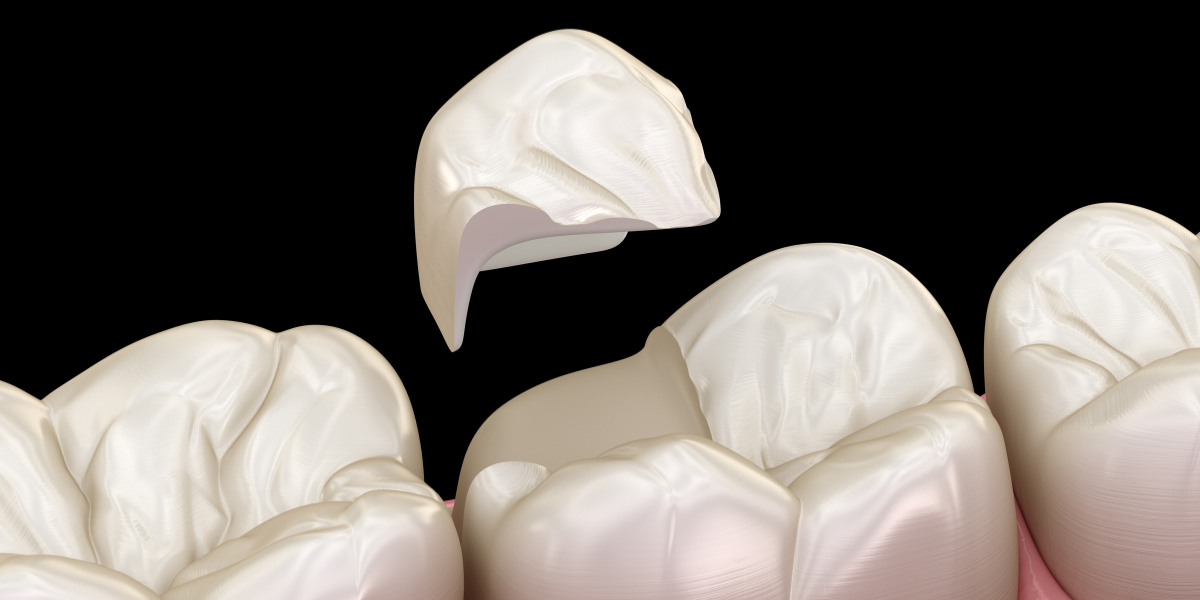
Fractured cusp
Sometimes a piece of the chewing surface breaks, often around an existing filling.
This is known as a fractured cusp.
Depending on the amount of damage, the tooth may be restored with a filling or protected with a crown.
A deeper cracked tooth
If the crack extends deeper into the tooth but the tooth is still restorable, your dentist may recommend a crown to protect it.
If the crack has affected the pulp, root canal treatment followed by appropriate restoration may be required.
The exact treatment will depend on the tooth and the extent of the damage.
Split tooth
A crack can sometimes progress until the tooth separates into distinct segments.
A fully split tooth generally cannot be restored as one intact tooth. In some cases, part of the tooth may be salvageable, but this depends on the location and extent of the fracture.
Crack extending below the gum line
This is one of the more serious situations.
If a crack extends below the gum line and makes the tooth unrestorable, extraction may be necessary.
That is why early assessment matters.
A tooth that is treatable today may become much harder to save if the crack continues to progress.
Can a Cracked Tooth Become Infected?
Yes.
A crack can create a pathway for bacteria to reach the inner part of the tooth.
If the pulp becomes infected, the problem can progress beyond simple tooth sensitivity. An infection may develop around the root and potentially lead to an abscess.
Watch for symptoms such as:
- Increasing or constant tooth pain
- Swollen gums
- Facial swelling
- A pimple-like bump on the gum
- Bad taste or pus
- Fever
- Increasing pain when biting
If these occur, seek prompt dental care.
Is a Cracked Tooth a Dental Emergency?
Not every cracked tooth requires an emergency visit.
A small crack without pain or other symptoms may be assessed through a normal dental appointment.
But severe pain, significant swelling, a badly broken tooth or an injury that has caused substantial damage should be assessed urgently.
If the crack is causing severe pain that is interfering with sleep or daily activities, urgent dental care is appropriate. NHS guidance also recommends urgent dental assessment for severe dental pain, swelling or significant dental injury.
If you have facial swelling accompanied by difficulty breathing or swallowing, that is more serious and requires emergency medical attention.
What Should You Do Before Seeing a Dentist?
If you think you have cracked a tooth, the safest approach is to stop putting unnecessary pressure on it.
Until you can see your dentist:
- Avoid chewing on the affected side.
- Choose softer foods.
- Avoid very hard or sticky foods.
- Avoid very hot or cold foods if they trigger pain.
- Keep the area clean with gentle brushing.
- Use an appropriate over-the-counter painkiller if you can safely take it and follow the label instructions.
- If swelling develops after an injury, a cold pack applied to the outside of the face may help with discomfort.
Do not try to glue the tooth yourself or deliberately bite down repeatedly to “test” whether it is cracked.
If a fragment has broken off, keep it and take it with you to the dentist. In some cases, a broken fragment may be useful during treatment.
How Can You Prevent a Cracked Tooth?
You cannot prevent every cracked tooth, but you can reduce unnecessary stress on your teeth.
Avoid chewing ice and very hard objects. Do not use your teeth to open packaging or bite non-food items.
If you play contact sports, wear a properly fitted mouthguard.
If you grind or clench your teeth, speak to your dentist about protecting your teeth and addressing the cause.
Regular dental examinations are also useful because some cracks cause little or no noticeable symptoms in the early stages.
Most importantly, do not ignore repeated pain when biting.
A tooth does not need to be visibly broken to have a problem.
So, What We Learn from this?
A cracked tooth can be surprisingly difficult to recognise. You may not see anything unusual, yet one tooth keeps giving you a sharp pain when you bite, release your bite or drink something cold.
Common signs of a cracked tooth include pain when chewing, intermittent tooth pain, temperature sensitivity and discomfort that seems to come from one particular tooth. But these symptoms can also occur with cavities, loose fillings, pulp problems and other dental conditions, so they cannot confirm a crack on their own.
A tiny enamel craze line may need nothing more than observation. A deeper crack may require a filling, crown, root canal treatment or, when the tooth cannot be saved, extraction. The earlier a problematic crack is assessed, the more opportunity there may be to protect the tooth.
If your tooth repeatedly hurts when you bite, especially if the pain is becoming more frequent or is accompanied by swelling or sensitivity, do not keep testing it at home. Get it examined.
If you have sudden tooth crack pain or need an assessment after a dental injury, Smile Town can provide care as a reliable dental clinic in Kolkata, including evaluation and treatment planning for cracked or damaged teeth.