
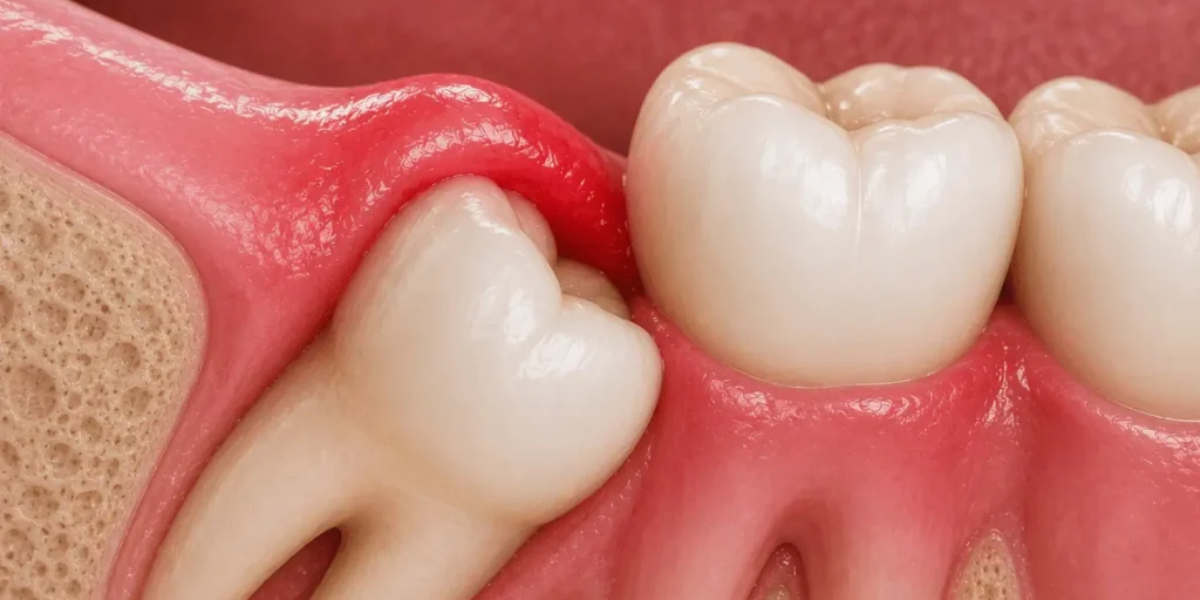
Wisdom Tooth Gum Swelling That Keeps Coming Back
The gum behind your last molar swells, becomes difficult to brush and then settles. A few weeks or months later, the same spot hurts again. One possible cause is pericoronitis, an inflamed and infected area of gum around a partly erupted wisdom tooth.
Book a dental assessment even if the swelling has eased. Temporary relief does not explain why it keeps happening. Your dentist needs to check the tooth, the surrounding gum and the molar beside it before recommending a lasting plan.
Why a gum flap can cause repeated trouble
When a wisdom tooth emerges only partly, some of its chewing surface may remain covered by gum. Food and bacteria can collect beneath this flap, making it difficult to keep clean.
You might notice tenderness, an unpleasant taste or mild aching that comes and goes. More severe episodes can involve pus, facial swelling, fever or restricted mouth opening. Other dental problems can produce similar symptoms, so the location alone is not enough for a diagnosis.
Cleveland Clinic’s guide to pericoronitis explains the gum-flap problem and the range of symptoms it can cause.
When to seek urgent help
Arrange urgent dental care if swelling is increasing, you have fever or feel unwell, pus is present, or opening your mouth is becoming difficult. Explain these symptoms when you call rather than requesting an ordinary check-up without mentioning them.
Go to the nearest hospital emergency department if mouth or neck swelling makes breathing, speaking or swallowing difficult. A clinic appointment several days away is not appropriate for these symptoms. Severe restriction in opening your mouth or extensive swelling also needs urgent assessment.
Smile Town’s emergency dentistry information can help you identify the type of dental concern to report. Check appointment availability directly; do not assume any clinic is open around the clock.
What you can do while waiting for the dentist
Keep the area as clean as you comfortably can with a soft brush. Gentle warm salt-water rinses may help with local comfort. Do not lift, cut or scrape the gum flap with a pin, toothpick or other sharp object.
Choose foods you can chew comfortably. If you need pain relief, check with a pharmacist or clinician that the medicine suits your health conditions and other medicines, and follow the packet directions. Avoid taking more than the recommended amount because the pain returns.
These measures are temporary support. They cannot establish whether the tooth is impacted, whether decay is present or why infection is recurring.
Will you need antibiotics every time?
Not necessarily. Professional cleaning and irrigation around the tooth are important initial measures for pericoronitis. Antibiotics are generally reserved for situations such as spreading infection, systemic illness or persistent swelling despite local treatment, according to professional prescribing guidance.
Do not repeat an old prescription or buy antibiotics because the previous episode seemed to respond. Tell the dentist what you took, when you took it and whether the symptoms returned. Medication may help control an episode when indicated, but it does not remove the area where food keeps collecting.
Ask what follow-up is needed after the acute symptoms settle. That discussion can prevent a pattern of treating each flare-up without reviewing the underlying problem.
Does recurring swelling mean the wisdom tooth must come out
Removal may be appropriate, especially when the same tooth causes repeated infection or other disease. The decision needs an examination and sometimes an X-ray to assess its position and the surrounding structures.
A first mild episode does not automatically mean extraction. A healthy wisdom tooth that is not causing problems may be monitored. NICE guidance distinguishes an uncomplicated first episode from repeated episodes when considering surgery; your clinician should apply that information to your circumstances.
Smile Town’s general dentistry services include wisdom-tooth extraction. Ask your dentist to explain the reason for removal, alternatives and the risks relevant to your tooth, including possible nerve injury where roots lie close to a nerve. Avoid booking surgery solely because an online symptom list sounds familiar.
For a Kolkata appointment, mention any previous episodes when contacting the Baguiati clinic. Bring earlier prescriptions and X-rays if available. If you travel from outside the city, ask about follow-up before choosing a date for treatment.
Questions about recurring wisdom-tooth swelling
Yes. Describe how often the swelling returns and how long episodes last. The tooth and gum can still be assessed between flare-ups.
A dentist may recommend a rinse as part of care, but it does not replace assessment, cleaning or a plan for repeated episodes. Ask which product is appropriate and how long to use it.
Recovery varies with the procedure and your work. Ask about expected discomfort, time off, follow-up and transport if sedation is planned. Do not schedule important work or travel on an assumed recovery time.
Wisdom-tooth care at Smile Town Dental and Aesthetic Clinic
Smile Town Dental & Aesthetic Clinic provides dental assessment and treatment for wisdom-tooth concerns. If you need the best dentists in Kolkata, residents can consult about recurring swelling, explain the full history when booking. The team can discuss whether the next step is care for the current episode, further assessment or a conversation about removal, based on what the examination shows.