Acne Marks vs Acne Scars: How to Choose the Right Treatment
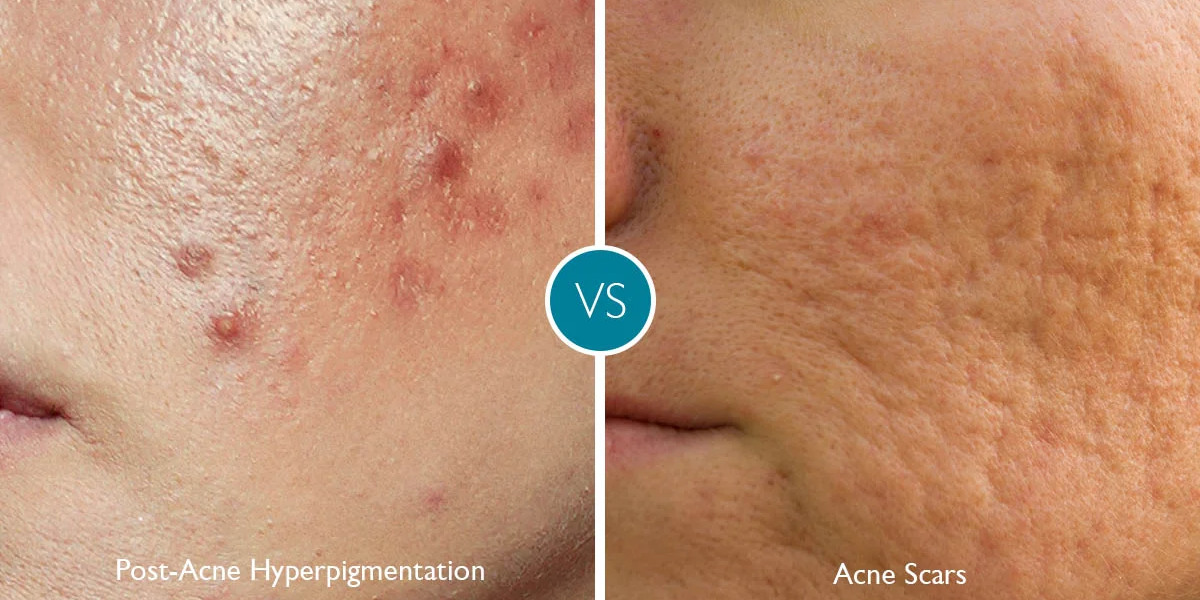
A flat brown spot left by a pimple is different from a small pit in your cheek. Both may be called an acne scar in conversation, but they do not respond to the same treatment.
The distinction is worth making before you buy a brightening serum or book a peel. Pigment treatment can help a dark mark without filling a depression. A scar procedure may address texture while leaving a separate need to manage acne and discolouration.
Look at colour and texture separately
Flat marks after pimples
Inflammation can leave a darker patch after acne heals. This is called post-inflammatory hyperpigmentation. The area is flat, even though the change in colour may be conspicuous. Some people notice red or pink marks instead; not every flat mark is excess pigment.
A skin examination can distinguish these changes and check whether you still have active acne. Trying to diagnose everything from a filtered selfie can be misleading, particularly when lighting hides texture.
Depressed or raised scars
A true acne scar involves a change in the skin’s structure. It may be indented or raised. Different scar shapes can need different approaches, and one person can have several types alongside flat marks.
The American Academy of Dermatology explains acne scar treatment options. Its guidance describes treatment planning according to scar type, skin tone and other individual factors rather than one standard procedure for everyone.
Control continuing acne before treating old scars
If new painful pimples keep appearing, treating only the old marks leaves the source of new damage active. Early acne treatment can reduce the risk of further dark spots and scars.
A clinician may recommend medicines applied to the skin, or other treatment according to severity. Some topical medicines, including retinoids, can help acne and related dark marks, but the choice needs to suit your skin and health. Mention pregnancy, pregnancy plans and all products you use before starting a prescription routine.
Avoid adding several exfoliating acids or acne products together because a short online routine recommends them. Irritation can create further discolouration in pigmentation-prone skin. Bring your products or a list of their ingredients to the consultation so advice fits what is already on your face.
What can help flat dark marks
Sun protection is part of managing hyperpigmentation. Choose a non-comedogenic, broad-spectrum sunscreen with SPF 30 or higher. A tinted sunscreen containing iron oxide can also help protect against visible light that contributes to dark spots. Ask for a formulation you can use consistently, rather than choosing only by the highest SPF number.
Your clinician may discuss a topical treatment and, for selected concerns, a chemical peel. Treatment should address the mark and its trigger without causing unnecessary irritation.
For a Kolkata commute, think about how the plan works with time outside and travel. Ask how to use sun protection through your day and whether a planned procedure requires changes to outdoor activity. You do not need a stronger peel merely because you want faster results before an event.
What can help pitted or raised scars
Depressed scars may be treated with procedures such as microneedling, selected peels, laser treatment, fillers or scar surgery, depending on their type. Raised scars need a different approach. A combination may be recommended, and visible improvement can take time.
The choice depends on your scar type and the clinician’s assessment. Smile Town’s skin treatment page lists acne-scar care, chemical peels and face PRP. Ask which treatment is being proposed for your particular marks or scars and whether another opinion or referral is appropriate.
Superficial exfoliation is not a reliable way to erase deep pits. PRP may be used alongside selected scar procedures, but it should not be described as a guaranteed way to remove every acne scar.
Precautions before a peel or scar procedure
People with darker skin tones can develop unwanted dark or light areas after some procedures, especially when treatment is poorly chosen or performed. Home peels and home devices also carry risks. Speak to a clinician experienced in treating your skin type before choosing a procedure.
Tell them about acne medicines used recently or in the past, previous procedures, and any history of raised scars. Ask what preparation is needed, how long healing may take and which signs should prompt a call afterwards.
Budget for the full plan, including follow-up and aftercare. A lower single-session price is not helpful if the procedure does not match your concern. If you are exploring skin consultations at Smile Town in Kalna, check clinician and treatment availability before booking travel.
Questions about marks and scars
Treatment aims to reduce their appearance. Complete removal cannot be promised, and several visits or approaches may be needed. Ask what improvement is realistic for your scar type.
Often both concerns can be addressed within a plan. Scar procedures are usually planned after active acne is controlled. Ask which part of treatment is intended for current acne and which part targets the marks.
Discuss timing first. Preparation, irritation, healing and pigmentation risk differ by treatment. Avoid relying on an online promise of instant clear skin for a fixed date.
Skin advice at Smile Town Dental and Aesthetic Clinic
Smile Town Dental & Aesthetic Clinic provides aesthetic services as well as dental care. The practice is a dental & aesthetic clinic in Kolkata, residents can visit for dental care and contact about skin consultations. Explain whether your main concern is new pimples, flat marks or uneven texture. The consultation can then focus on the treatment that fits that concern and the precautions relevant to your skin.