What Happens If You Leave a Missing Tooth Untreated?
Losing a tooth can feel like a problem you can deal with later.
If it is a back tooth, you may think, “Nobody can see it anyway.” If it does not hurt, you may wonder whether replacing it is really necessary. And if you have already got used to chewing around the gap, it can be easy to assume that your mouth has simply adjusted.
But a missing tooth is not just an empty space.
Your teeth work together. When one is lost, the surrounding teeth and the bone that once supported it are affected too. Some changes happen slowly, which is why you may not notice a problem immediately.
That does not mean nothing is happening.
A missing tooth can affect chewing, the position of nearby teeth, the health of the jawbone and, depending on where the tooth was lost, even the appearance and function of your smile.
So, what actually happens if you leave a missing tooth untreated? Do you always need to replace it? And how soon should you consider your options?
Let’s look at what can happen over time.
Is It Really a Problem to Leave a Tooth Missing?
Not necessarily in every situation.
The right decision depends on which tooth is missing, your overall oral health, your bite, the condition of the surrounding teeth and your individual needs.
For example, losing a wisdom tooth often does not require replacement because it is not usually essential to normal chewing.
Losing a front tooth is different. Apart from the obvious change to your smile, it can affect speech and biting.
A missing back tooth may be less visible, but it can still affect how you chew and how the neighbouring teeth bear forces.
So the question is not simply:
“Can I live with a missing tooth?”
You probably can.
The more useful question is:
“What changes could happen if I leave this gap untreated?”
That is where the long-term consequences become important.
What Happens After You Lose a Tooth?
A tooth does more than sit above your gum.
Its root is surrounded by bone and connected to the tissues that support it. The forces created when you chew are transmitted through the tooth into the surrounding bone.
When the tooth is removed, those forces disappear from that area.
The body then gradually remodels the bone that previously supported the tooth. This is called bone resorption.
The change is usually gradual rather than something you feel happening.
You may not wake up one morning and notice that your jawbone has changed. But over time, there may be less bone available in the area where the tooth was lost.
This becomes particularly relevant if you later decide to have a dental implant, because implants require sufficient bone support.
Can a Missing Tooth Cause Bone Loss?
Yes.
After a tooth is lost, the bone that once surrounded its root no longer receives the same stimulation from chewing forces. The body gradually remodels and resorbs that bone.
Research has documented substantial dimensional changes in the tooth socket after extraction, particularly during the first months of healing. (pubmed.ncbi.nlm.nih.gov)
The amount of bone change varies from person to person.
It can depend on factors such as:
- Which tooth was lost
- The condition of the bone before extraction
- Gum health
- The way the extraction site heals
- Your general oral health
- Whether the area is later restored
This does not mean everyone with a missing tooth will develop severe bone loss.
But it is one of the reasons dentists consider tooth replacement sooner rather than later in appropriate cases.
Can Your Other Teeth Move Into the Gap?
They can.
Your teeth are not completely fixed in place. They are held in position by supporting tissues, and their position can change over time.
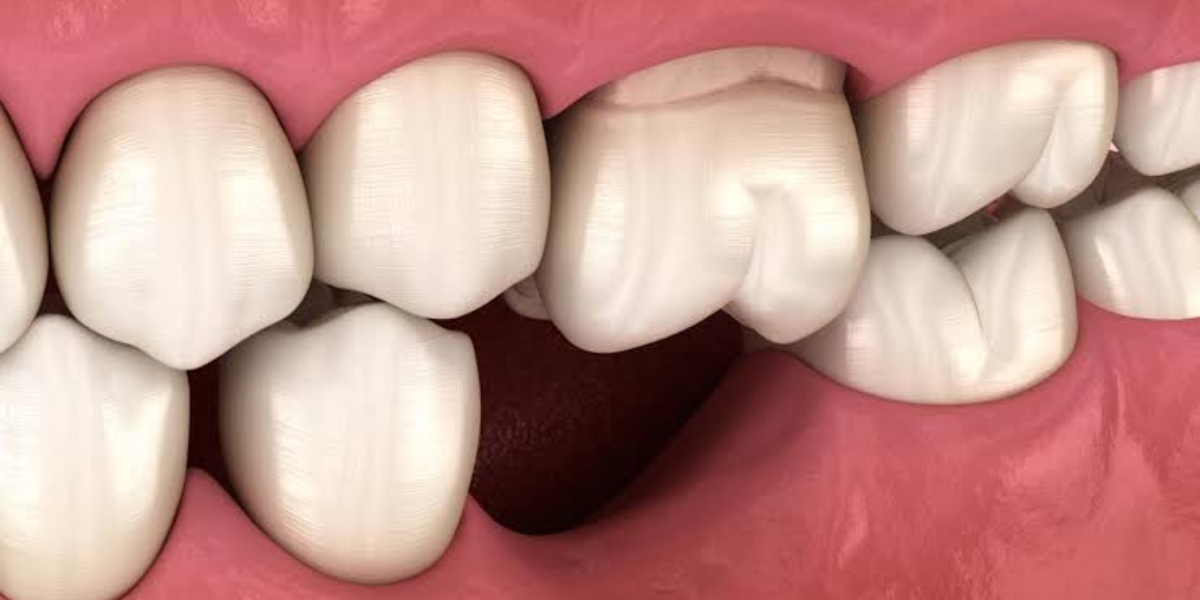
When one tooth disappears, the neighbouring teeth may gradually tilt or drift towards the empty space.
The tooth in the opposite jaw may also move into the space. This is sometimes called over-eruption.
These changes do not happen at the same speed in everyone, and they may be subtle at first.
But as teeth move, the way they meet when you bite can change.
A gap that initially looked like a simple missing tooth can therefore become part of a larger change in your bite.
Can a Missing Tooth Affect Your Bite?
Yes, particularly when the missing tooth plays an important role in chewing.
Imagine losing one of the teeth you normally use to chew on one side of your mouth.
You may naturally start using the other side more.
Over time, this can change the way you distribute chewing forces. Meanwhile, neighbouring teeth may shift into the gap and the opposing tooth may move.
This can alter your bite.
A changed bite does not automatically mean you will develop pain or serious problems. But if your teeth are no longer meeting in the same way, your dentist may want to monitor the changes.
Does a Missing Tooth Affect Chewing?
This is one of the most immediate consequences.
If you lose a tooth involved in chewing, you lose part of the surface available to break down food.
You may compensate by:
- Chewing on the opposite side
- Avoiding harder foods
- Taking smaller bites
- Using the remaining teeth more heavily
The impact depends on which tooth is missing.
Losing a single front tooth may have little effect on grinding food but can affect biting into foods such as apples or sandwiches.
Losing a molar can have a much greater effect on chewing because molars are designed to handle heavier chewing forces.
This is why a missing tooth should be assessed based on its function, not just how visible it is.
Can a Missing Tooth Affect Your Speech?
It can, particularly when a front tooth or several teeth are missing.
Your teeth, tongue and lips work together to produce certain sounds.
A gap in the front of the mouth can sometimes affect the way air moves while speaking and may change the pronunciation of certain sounds.
The effect varies considerably from person to person.
Some people adapt quickly. Others notice a clear difference in their speech.
If speech has changed after tooth loss, replacing the missing tooth may help restore the normal shape and function of the mouth.
Can Missing Teeth Change the Appearance of Your Face?
A single missing tooth does not necessarily produce a noticeable change in facial appearance.
However, losing multiple teeth can have a greater effect.
Teeth and the supporting jawbone help maintain the shape and structure of the lower face. As bone is remodelled after tooth loss, the tissues in the area can lose some of their underlying support.
This is one reason extensive tooth loss can eventually be associated with changes in facial appearance.
It is not something that happens immediately after losing one tooth.
The more important point is that tooth loss affects the structures beneath the visible smile as well as the smile itself.
What Problems Can Develop Around the Gap?
A missing tooth can change the environment around the neighbouring teeth.
If teeth drift or tilt into the space, cleaning between them may become more difficult.
Food may become trapped in areas that were previously easy to clean.
That can make maintaining good oral hygiene more challenging and may increase the risk of plaque accumulation and gum problems.
This does not mean a missing tooth automatically causes gum disease.
Your brushing, interdental cleaning, diet, smoking status and existing gum health all matter.
But a changed tooth position can make daily cleaning more difficult, which is worth considering when deciding whether to leave a gap untreated.
What Happens If You Wait Several Years Before Replacing a Tooth?
This is where timing becomes important.
You may lose a tooth today and feel perfectly fine.
Five years later, you may decide that you finally want a dental implant.
At that point, the implant itself may still be possible. But your dentist will need to assess how much bone remains in the area.
If there has been significant bone loss, additional treatment such as bone grafting may sometimes be considered before or alongside implant placement.
Not everyone who delays tooth replacement will need a bone graft.
But delaying treatment can sometimes make the treatment process more complicated.
That is one reason your dentist may discuss replacement options soon after extraction rather than waiting until problems appear.
Do You Always Need to Replace a Missing Tooth?
No.
This is an important point.
A dentist does not automatically need to replace every missing tooth.
The decision depends on several factors, including:
- Which tooth is missing
- Whether it affects your chewing
- Whether neighbouring teeth are stable
- Your bite
- The condition of your gums and remaining teeth
- Your overall dental health
- Your personal preferences
- Whether replacement would provide a meaningful functional or cosmetic benefit
A missing wisdom tooth, for example, usually does not need replacement.
A missing front tooth is much more likely to benefit from replacement.
A missing molar falls somewhere in between and needs an individual assessment.
So rather than assuming “every missing tooth must be replaced”, it is better to discuss the specific gap with your dentist.
What Are the Options for Replacing a Missing Tooth?
If you and your dentist decide that replacing the tooth is appropriate, there are several options.
The right choice depends on your oral health, the number of teeth missing, the condition of the surrounding teeth and your budget and preferences.
Dental implants
A dental implant is designed to replace the tooth root.
A small implant is placed into the jawbone, where it can integrate with the surrounding bone. A replacement tooth, known as a crown, is then attached to the implant after the appropriate healing period.
One of the main advantages of an implant is that it does not require the neighbouring teeth to be prepared as supports in the same way that a conventional dental bridge does.
Implants can also help maintain the bone around the implant site by providing functional stimulation to the bone.
However, implants are not suitable for everyone immediately. Your dentist will need to assess your bone, gums, overall oral health and other factors.
Dental bridges
A dental bridge replaces a missing tooth by using the neighbouring teeth or other support to hold a replacement tooth in position.
A conventional bridge generally involves preparing the supporting teeth.
Bridges can restore chewing function and the appearance of the smile without placing an implant into the jawbone.
However, the suitability of a bridge depends on the condition and position of the neighbouring teeth.
Removable partial dentures
A partial denture can replace one or several missing teeth and can be removed by the patient.
This can be useful when multiple teeth are missing or when an implant or fixed bridge is not suitable.
The design depends on the number and position of the missing teeth and the condition of the remaining teeth and gums.
Your dentist can explain how the denture would fit, how to clean it and what to expect while adjusting to it.
Which Tooth Replacement Option Is Best?
There is no universal answer.
A dental implant may be a good option for someone with a single missing tooth and healthy supporting tissues.
A bridge may make more sense in another situation, particularly when the neighbouring teeth already require crowns or substantial restoration.
A partial denture may be more appropriate when several teeth are missing.
Your dentist needs to look at the whole mouth rather than choosing a replacement based only on the gap.
This usually includes examining the gums, surrounding teeth, bite and available bone.
If an implant is being considered, dental imaging may also be needed to assess the bone and surrounding structures.
Can You Get a Dental Implant Years After Losing a Tooth?
Often, yes.
Losing a tooth years ago does not automatically mean you can no longer have an implant.
The main question is whether there is enough suitable bone and healthy tissue to support it.
If bone has reduced significantly, a dentist may discuss procedures to rebuild the area before implant placement.
This is why a delayed implant can sometimes involve more planning than replacing a tooth soon after extraction.
It is not a guarantee that early replacement will always be simpler, but your treatment options can be influenced by changes that occur after tooth loss.
Is It Better to Replace a Tooth Immediately?
Not necessarily in every case.
There is no single timeline that applies to everyone.
Sometimes an implant can be placed soon after extraction. In other cases, the dentist may recommend allowing the area to heal first.
The timing can depend on:
- Why the tooth was removed
- Whether infection was present
- The condition of the bone
- The condition of the gums
- The location of the tooth
- Your overall oral health
- The type of replacement being planned
If you have recently lost a tooth and are considering an implant, it is worth discussing your options early.
That does not mean you have to commit to treatment immediately.
It simply gives you a chance to understand how the area is healing and what options are available.
What Should You Do If You Have Had a Missing Tooth for Years?
Do not assume that it is too late to do anything.
Start with an examination.
Your dentist can assess:
- The missing-tooth area
- Bone levels
- The position of nearby teeth
- The opposing tooth
- Your bite
- Gum health
- Any other untreated dental problems
An X-ray or other dental imaging may be recommended depending on the replacement option being considered.
From there, you can discuss whether leaving the space alone is reasonable or whether replacing the tooth would provide a functional or long-term benefit.
How Can You Protect Your Remaining Teeth?
When one tooth is missing, the remaining teeth become even more important.
Good oral care helps protect the teeth you still have.
Brush twice daily with fluoride toothpaste and clean between your teeth every day. Attend regular dental examinations, particularly if you have a history of gum disease or tooth decay.
If you grind or clench your teeth, mention it to your dentist.
And if another tooth starts hurting, becomes loose or develops sensitivity, do not ignore it simply because you already have a missing tooth.
The goal is not only to replace lost teeth.
It is to protect the teeth that remain.
What If You Don’t Want a Dental Implant?
That is completely reasonable.
An implant is only one option.
Some people prefer a bridge. Others choose a removable denture. In certain situations, a dentist may recommend leaving the space alone and monitoring it.
The best treatment plan is one that makes sense for your oral health and your circumstances.
A consultation should therefore be a discussion rather than a sales pitch.
You should understand:
- What happens if you leave the space untreated
- What replacement options are available
- The advantages and limitations of each option
- Whether bone loss has already occurred
- What treatment would involve
- How long the process may take
Once you have that information, you can make an informed decision.
So, What We Learn from this?
A missing tooth may not hurt, but that does not mean the gap is having no effect.
Over time, the bone that supported the missing tooth can shrink, nearby teeth may move, the opposing tooth may over-erupt and your bite or chewing pattern may change. The extent of these changes varies from person to person, and not every missing tooth needs to be replaced.
The most important factor is which tooth is missing and what is happening around it.
Dental implants, bridges and removable partial dentures are among the options available when tooth replacement is appropriate. An implant may help restore both function and support in the area, but whether it is suitable depends on your bone, gums, remaining teeth and overall oral health.
If you have been living with a missing tooth for months or years, you have not necessarily missed your opportunity for treatment. An examination can help determine the condition of the area and whether replacing the tooth would be beneficial.
If you are considering replacing a missing tooth, Smile Town is a reliable dental clinic in Kolkata where your oral health, surrounding teeth and replacement options can be assessed before deciding on the most suitable approach.