Can You Get Dental Implants If You Have Bone Loss?
Being told you have bone loss after losing a tooth can feel like the end of the conversation.
You may have already been thinking about dental implants. Then somebody tells you that implants need enough bone, and suddenly you are wondering whether you missed your chance.
The good news is that bone loss does not automatically mean dental implants are impossible.
The important question is how much bone remains, where the bone has been lost, how healthy the surrounding tissues are and whether there is a suitable way to create enough support for an implant.
In some cases, there may already be enough bone for implant placement.
In others, a bone graft may be recommended.
For upper back teeth, a sinus lift may sometimes be part of the treatment.
And in more complex cases, alternative implant strategies or non-implant tooth replacement may need to be discussed.
Mayo Clinic states that dental implants may be suitable when enough bone is available to secure them or when bone grafting can create the necessary foundation.
So before assuming that bone loss means “no implant”, it is worth understanding what dentists actually look for.
Why Do Dental Implants Need Bone?
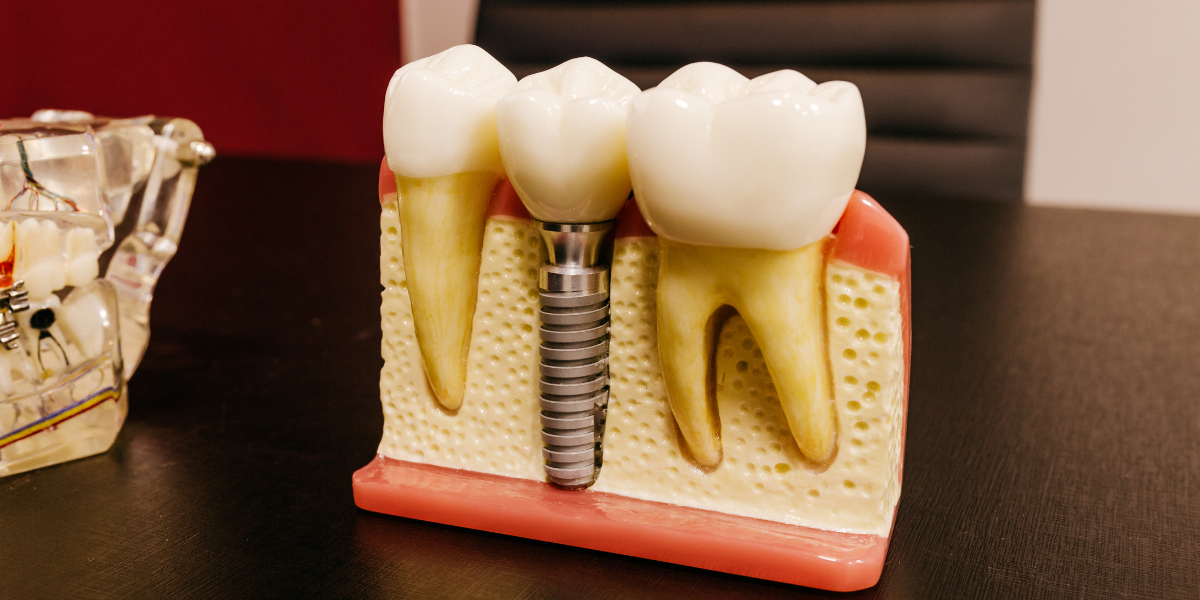
A dental implant replaces the root portion of a missing tooth.
It is placed into the jawbone and needs to become stable within that bone before the final tooth is attached.
That process is known as osseointegration.
Think of the bone as the foundation.
The crown is the visible part of the tooth replacement, but the foundation underneath it needs to be strong and stable.
Mayo Clinic explains that if the jawbone is too thin or too soft, bone grafting may be needed to create a stronger base for the implant.
Why Does Bone Loss Happen?
Bone loss can occur for several reasons.
One common reason is simply losing a tooth.
When the natural tooth root is no longer present, the area of the jawbone supporting that root no longer receives the same stimulation and can gradually change.
Bone loss can also be associated with:
- Gum disease
- Long-standing infection
- Trauma
- Tooth extraction
- Prolonged tooth loss
- Other conditions affecting bone health
Cleveland Clinic notes that bone grafting may be used when jawbone has been lost following tooth extraction, trauma or gum disease and additional support is needed for dental implants.
That means the amount of bone available today may not be the same as it was when the tooth was originally lost.
Can You Get Dental Implants With Bone Loss?
Often, yes.
The phrase “bone loss” covers a very wide range of situations.
A small, localised area of bone loss is not the same as severe bone loss throughout an entire section of the jaw.
Some people with bone loss have enough remaining bone to place an implant without a separate grafting procedure.
Others need bone augmentation first.
Mayo Clinic specifically lists having enough bone to secure implants or being able to undergo a bone graft as part of implant suitability.
So the diagnosis of bone loss is not enough information to answer whether implants are possible.
How Does a Dentist Check Your Bone?
A dentist cannot reliably determine implant suitability just by looking at the gum.
The bone needs to be assessed.
Dental X-rays may be used during the planning process, while three-dimensional imaging such as CBCT may be recommended when a more detailed understanding of the bone and surrounding structures is needed.
The dentist may assess:
Bone height: How much vertical bone is available?
Bone width: Is the ridge wide enough for the planned implant?
Bone quality: Is the bone suitable for the proposed implant?
Nearby anatomy: Are nerves or the sinus close to the planned implant position?
Gum health: Are the tissues around the area healthy?
Mayo Clinic notes that implant treatment planning takes into account the number of teeth being replaced and the condition of the jawbone and remaining teeth.
What Is Bone Grafting for Dental Implants?
A bone graft is used to increase the amount of bone in an area where more support is needed.
The graft provides a framework that allows new bone to develop in the area.
Depending on the case, different grafting materials may be used.
The purpose is not simply to “fill the hole”.
It is to create a more suitable foundation for future implant placement.
Cleveland Clinic describes bone grafting as a treatment used to increase jawbone volume and density and create support for implants.
Do You Always Need a Bone Graft?
No.
This is another common misunderstanding.
Some people with bone loss still have enough usable bone at the planned implant position.
Others may have a small defect that can be managed during implant placement.
Mayo Clinic notes that when only minor grafting is needed, it may sometimes be performed at the same time as implant surgery.
A larger deficiency is more likely to require a separate healing period before the implant can be placed.
The treatment therefore depends on the amount of bone needed, not simply on the fact that bone loss exists.
Can Bone Grafting and Implant Placement Happen Together?
Sometimes.
The key consideration is whether the implant can achieve adequate initial stability.
If enough native bone remains to stabilise the implant, the dentist may sometimes perform a minor augmentation at the same time.
If the area lacks sufficient support, placing the implant immediately may not be appropriate.
The graft may need to heal first.
This explains why two people with “bone loss” can have completely different treatment timelines.
How Long Does Bone Grafting Take to Heal?
Healing depends on the type and extent of grafting.
A relatively small graft may need less time than a major reconstruction.
Mayo Clinic explains that it may take several months for transplanted bone to develop enough new bone to support an implant and that minor grafting can sometimes be performed alongside implant surgery.
So if your treatment involves a substantial graft, expect the overall implant process to take longer.
That waiting period is not simply a delay.
The bone needs time to heal and mature.
What Is a Sinus Lift?
A sinus lift is a procedure that may be considered when there is not enough bone in the upper back jaw for implant placement.
The maxillary sinus sits above the upper back teeth.
After teeth in this area are lost, the available bone height can sometimes become too limited for a conventional implant.
A sinus lift raises the sinus floor and creates additional space where bone can develop.
The procedure can help create a stronger foundation for implants in selected patients.
Does Every Upper Back Implant Need a Sinus Lift?
No.
It depends on the available bone and the planned implant.
Some patients have enough bone height to receive an implant without a sinus lift.
Others may need only a limited sinus augmentation.
Patients with more significant deficiency may need more extensive treatment.
This is why the answer should come from imaging and treatment planning rather than a general rule.
What If You Have Severe Bone Loss?
Severe bone loss can make implant treatment more complex.
But complex does not automatically mean impossible.
Depending on the case, the dentist may consider:
- More extensive bone grafting
- Guided bone regeneration
- Sinus augmentation
- Different implant positioning
- Specialised implant approaches
- Alternative tooth replacement
The correct option depends on your anatomy.
There is no single treatment that works for every patient with severe bone loss.
Can Gum Disease Cause Bone Loss Around Teeth?
Yes.
Advanced gum disease can damage the tissues and bone supporting natural teeth.
When a patient has lost bone because of periodontal disease, controlling the disease becomes an important part of any future implant plan.
It is not enough to simply rebuild the bone and ignore the condition that caused the loss.
The underlying gum disease needs appropriate treatment and long-term maintenance.
Can You Get Implants After Gum Disease?
Possibly.
Having a history of gum disease does not automatically make implant treatment impossible.
But active periodontal disease should be managed first.
This is particularly important because the same patient factors that contributed to gum problems can also threaten the tissues around an implant.
A good implant plan therefore considers both:
Can we place the implant?
and
Can we keep the tissues around it healthy afterwards?
Does Smoking Affect Implant Treatment?
Smoking matters because it can affect healing and implant outcomes.
Mayo Clinic includes not smoking among factors that may support suitability for implant treatment and notes that tobacco use is considered during implant planning.
If you smoke, speak openly with your dentist.
The goal is to understand the added risk and make the treatment as predictable as possible.
Can Diabetes Affect Implant Treatment?
Diabetes does not automatically mean implants are impossible.
However, medical conditions that affect healing need to be considered.
Mayo Clinic notes that implant candidates should not have health conditions that interfere with bone healing.
Your dentist may need information about your general health and medication and may coordinate with your doctor when appropriate.
Does It Matter How Long the Tooth Has Been Missing?
It can.
After tooth loss, the jawbone in the area can gradually change.
Someone who lost a tooth recently may have a different amount of available bone from someone who has had the same tooth missing for many years.
That does not mean late implant treatment is impossible.
It may simply mean that the treatment plan needs additional bone assessment or reconstruction.
Can You Get Dental Implants Without Bone Grafting?
Yes, in some patients.
The presence of bone loss elsewhere does not automatically mean there is insufficient bone at the planned implant site.
The dentist assesses the specific location.
If adequate bone remains at the exact position required for the implant, grafting may not be necessary.
The important point is not whether you have “some bone loss”.
It is whether there is enough suitable bone where the implant needs to go.
What If an Implant Is Not Possible?
There are still options.
A fixed bridge can replace a missing tooth using support from neighbouring teeth or implants.
A removable partial denture can also replace one or more missing teeth.
The choice depends on the number of teeth missing, the condition of surrounding teeth, gum health, bone, your preferences and your overall dental situation.
Implants are not the only legitimate way to replace a missing tooth.
Is It Better to Replace a Missing Tooth Early?
Earlier assessment can be useful because bone changes after tooth loss can affect future treatment options.
That does not mean every missing tooth needs immediate implant placement.
But discussing the replacement plan early can help your dentist evaluate whether preserving the available bone or planning an early graft might be useful.
Waiting several years does not necessarily make implants impossible.
It can, however, change the complexity of treatment.
What Happens During an Implant Consultation With Bone Loss?
The consultation usually starts with your dental history and examination.
Your dentist will want to know:
- When the tooth was lost
- Why it was lost
- Whether you have had gum disease
- Your current oral hygiene
- Whether you smoke
- Your medical history
- Your expectations about tooth replacement
Imaging then helps assess the bone and surrounding anatomy.
From there, the dentist can explain whether you:
Can proceed directly with an implant
Need bone augmentation first
May need sinus augmentation
or
Should consider another tooth replacement option
That is much more useful than a generic answer based on the words “bone loss”.
Frequently Asked Questions
Often, yes. You may be able to receive an implant if enough suitable bone remains or if the bone can be rebuilt through grafting or another augmentation procedure.
There is no single measurement that applies to every patient and every implant. Your dentist needs to evaluate bone height, width, quality and nearby anatomy.
Not always. Some patients have enough usable bone despite having some bone loss, while others require grafting to create adequate support.
Yes. Healthy tissues around an implant are essential, so active gum disease should be managed before implant treatment and monitored afterwards.
The procedure is performed using anaesthesia, but some discomfort and swelling can occur during recovery. Your dentist should explain your expected recovery based on the specific procedure.
So, What We Learn from this?
Bone loss does not automatically close the door on dental implants.
The real question is whether there is enough suitable bone at the specific location where the implant needs to be placed. If there is not, bone grafting, guided bone regeneration or a sinus lift may sometimes create the necessary foundation. Mayo Clinic specifically recognises bone grafting as an option when additional bone is needed to secure an implant.
The severity and location of the bone loss matter.
So do gum health, smoking, general health, healing ability and the cause of the original bone loss.
You may need no additional bone treatment.
You may need a small graft.
Or you may need a more involved treatment plan before an implant becomes possible.
The important thing is not to make a decision based solely on being told that you have “bone loss”.
Get the area properly examined and imaged so that your dentist can explain what bone is available and what options are realistic.
For patients exploring implants after bone loss, Smile Town can help you discuss the available options with a reliable dental clinic in Kolkata, based on your bone condition, gum health and tooth replacement needs.