How Long Do Dental Implants Last? Factors That Affect Their Lifespan
Losing a tooth is one thing.
Having to think about replacing it again years later is something most people would rather avoid.
That is why one of the first questions people ask before getting a dental implant is simple: How long will it actually last?
You may have heard that dental implants can last a lifetime. You may also have seen claims that they last 10, 15, 20 or even 30 years. So which one is correct?
The honest answer is that there is no single expiry date for every dental implant.
A well-planned and properly maintained implant can remain functional for decades, and some implants can last for the rest of a person’s life. However, the implant itself is only one part of the treatment. The crown or other replacement tooth attached to it can wear, chip or need replacement sooner. Cleveland Clinic notes that, with proper brushing, flossing and regular dental visits, implants can often last a lifetime, while crowns and bridges may need replacement over time.
And then there is everything happening around the implant.
Your gums, jawbone, oral hygiene, bite, smoking habits, general health and follow-up care can all affect how long it remains healthy and stable.
So rather than asking only, “How many years will my implant last?”, it is more useful to ask:
“What determines whether my dental implant lasts for decades?”
That is where the real answer begins.
What Is the Lifespan of a Dental Implant?
Dental implants are designed as long-term replacements for missing teeth.
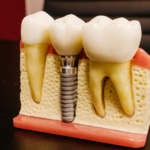
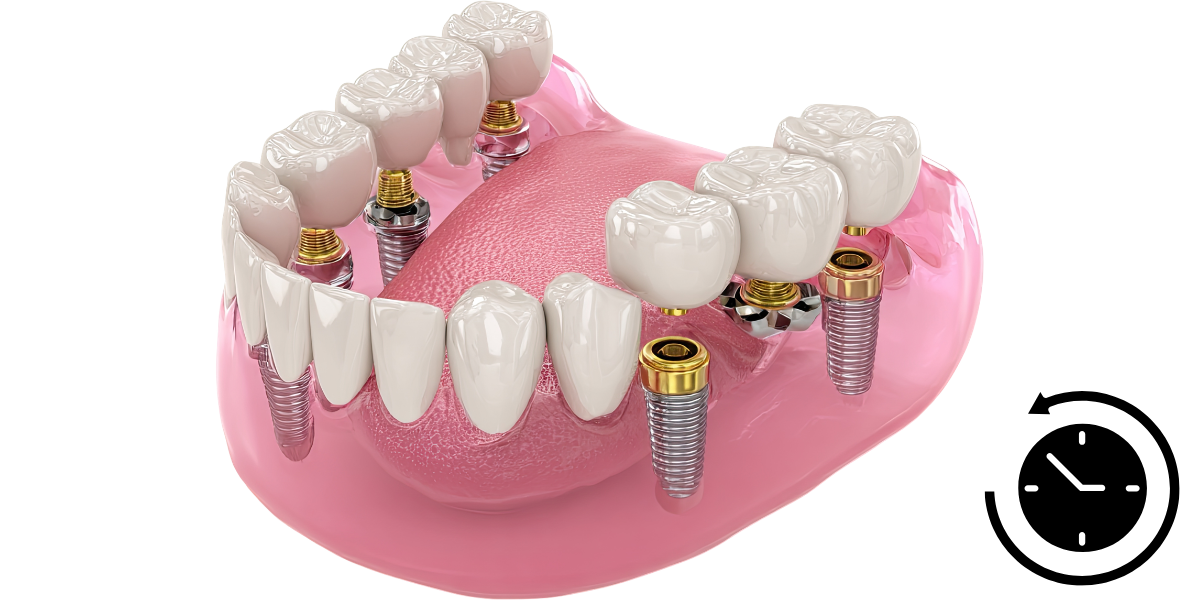
The implant itself is usually a screw-shaped fixture placed into the jawbone. Once healing takes place, bone grows around it and anchors it in position. This process is known as osseointegration. The implant then supports an abutment and a visible restoration, such as a crown, bridge or denture.
This is important because when people say, “My dental implant lasted 10 years,” they may actually be talking about the whole restoration rather than the implant fixture itself.
These parts do not necessarily have the same lifespan.
The implant fixture can remain stable for decades.
The crown is exposed to everyday chewing forces and may eventually need repair or replacement.
The abutment and other components may also require maintenance depending on the implant system and restoration.
A 2024 meta-analysis examining 20-year implant survival found that long-term survival can remain high, but the researchers also highlighted the limitations of the available evidence and the importance of continued follow-up. In the prospective studies included, mean implant survival was around 92%, while the estimate fell when missing data were accounted for.
That is a useful way to look at dental implant longevity.
Dental implants can last a very long time, but no dentist can honestly guarantee an exact number of years for every patient.
Dental Implant vs Crown: Which One Actually Needs Replacing?
This is probably the most important distinction in the entire topic.
Imagine a missing front tooth being replaced with a dental implant.
The implant fixture is placed into the jawbone.
An abutment connects the implant to the crown.
The crown is the part that looks like your tooth and takes the force of chewing.
If the crown becomes worn, chipped or damaged after several years, that does not automatically mean the implant has failed.
The dentist may be able to replace the crown while keeping the implant fixture in place.
Cleveland Clinic currently notes that most crowns and bridges last around 15 years, although the exact lifespan varies.
This difference often gets lost when people search for the average dental implant lifespan.
The visible tooth may need replacement before the implant itself.
So a person can technically have the same implant fixture for decades while receiving a new crown at some point along the way.
What Does “Implant Survival” Actually Mean?
You will often see studies talk about implant survival rates.
That does not necessarily mean that every implant looked perfect, had no bone loss, needed no maintenance or had no complications during the entire study.
“Survival” generally refers to whether the implant remains in place and functional at a particular follow-up point.
That is different from “success,” which can involve additional clinical criteria.
This distinction matters because a dental implant can remain in the mouth but still develop problems that require treatment, such as inflammation around the implant, bone loss or prosthetic complications.
A 2019 systematic review of contemporary dental implants reported an estimated 10-year survival of 96.4% at the implant level in its traditional analysis. A sensitivity analysis that accounted for missing data produced a more conservative estimate of 93.2%.
More recent evidence also supports long-term survival, but it shows why it is better to think in terms of high long-term survival rather than a guaranteed lifespan.
What Can Cause a Dental Implant to Fail?
Dental implant failure can happen at different stages.
Sometimes an implant fails relatively early because the bone does not integrate properly with it.
Other failures happen later, after the implant has already been functioning for years.
The causes are not always the same.
Among the factors associated with poorer long-term outcomes are smoking, poor oral hygiene, gum disease, excessive bite forces, certain medical conditions, insufficient bone support and problems with the implant restoration. NHS guidance also identifies smoking, poor oral hygiene, a history of gum disease, poorly controlled diabetes and other factors as risks for late implant failure.
Let’s look at the major factors in more detail.
Factors That Affect Dental Implant Lifespan
1. Oral Hygiene
This is one of the most controllable factors.
An implant cannot develop a cavity in exactly the same way as a natural tooth because the implant itself is not a natural tooth. But that does not make the area around it immune to disease.
Plaque can accumulate around the gum and implant, causing inflammation.
If the inflammation progresses, the tissues and bone supporting the implant can be affected.
That is where conditions such as peri-implant mucositis and peri-implantitis become important.
Regular brushing and cleaning between the teeth help control plaque around natural teeth as well as implant restorations. NHS guidance recommends brushing with fluoride toothpaste twice a day and cleaning between the teeth every day to reduce plaque and gum disease.
Implant care may also require specific cleaning methods around the restoration, depending on the design.
The message is simple:
Getting the implant is only part of the job. Keeping the area clean is what helps protect it afterwards.
2. Gum Health and Peri-Implantitis
One of the biggest threats to long-term implant health is inflammation around the implant.
Peri-implantitis is a condition involving inflammation around an implant and associated loss of supporting bone.
It can eventually compromise the stability of the implant.
This is especially relevant for people who have previously had periodontal disease.
A 2024 systematic review and meta-analysis found that patients with a history of periodontitis had a significantly higher risk of implant loss, greater marginal bone loss and a higher risk of peri-implantitis than patients without that history.
Another 2024 systematic review focusing on prospective cohort studies also found a significant association between a history of periodontitis and implant failure, peri-implantitis and greater marginal bone loss, although the authors rated the evidence quality as limited.
This does not mean someone who has had gum disease cannot receive implants.
It means gum health needs to be taken seriously before and after implant treatment.
A healthy implant starts with healthy tissues around it.
3. Smoking and Tobacco Use
Smoking is one of the clearest lifestyle factors associated with poorer implant outcomes.
Smoking can interfere with healing and is also associated with gum and peri-implant disease.
A 2024 systematic review and meta-analysis involving more than 59,000 implants found that smoking was associated with a higher risk of early dental implant failure. At the implant level, the pooled odds ratio for early failure was 2.59 compared with non-smokers.
Research has also found an association between smoking and peri-implantitis. A systematic review and meta-analysis reported significantly greater peri-implantitis risk among smokers.
NHS implant guidance therefore advises patients to stop smoking and highlights smoking as a risk factor for implant failure.
This is one area where the patient’s everyday choices can genuinely influence the long-term outcome.
4. Teeth Grinding and Clenching
You may look after your implant perfectly and still put it under excessive mechanical stress.
That can happen if you regularly grind or clench your teeth.
Repeated heavy forces can affect the crown, screws and other components and may place additional stress on the implant system.
Cambridge University Hospitals notes that people who grind their teeth can overload implants, reducing their long-term success.
If you grind at night, your dentist may discuss protective options such as a night guard, depending on your bite and restoration.
The important thing is to mention grinding or clenching during the implant consultation rather than treating it as an unrelated issue.
5. Diabetes and Blood Sugar Control
Having diabetes does not automatically mean dental implants will fail.
What matters is the overall health picture and particularly how well the condition is controlled.
Poorly controlled diabetes can affect healing and is associated with increased risk of peri-implant complications.
Recent systematic-review evidence continues to support this distinction. A 2026 review of studies available through July 2025 found that implant survival can remain high in people with diabetes, but poorly controlled diabetes was associated with worse peri-implant outcomes and greater bone loss.
Another systematic review reported that well-managed diabetes did not significantly compromise implant survival, while poorer glycaemic control was associated with less favourable peri-implant outcomes.
So the conversation should not be:
“Do you have diabetes?”
It should be:
“How well is your diabetes managed, and what does that mean for your treatment?”
Your dentist may also need to coordinate care with your physician depending on your health.
6. Quality and Quantity of Jawbone
An implant needs adequate bone support.
After tooth loss, the jawbone in that area can gradually change because it is no longer receiving the same stimulation from a natural tooth root.
This can affect implant planning.
Some people have enough bone to receive an implant directly. Others may need procedures such as bone grafting before or alongside implant placement. NHS guidance notes that some patients require bone grafting when implants are placed.
The quality and quantity of bone can therefore influence not only whether an implant can be placed, but also how predictable the treatment may be.
This is one reason dentists may use X-rays or 3D imaging during implant planning.
A good implant does not compensate for inadequate planning.
7. The Way the Implant Is Placed
Long-term implant health is influenced by what happens before the implant ever becomes functional.
The position of the implant, the available bone, the surrounding gum tissue, the surgical technique and the restoration placed on top all matter.
The implant must be stable enough to integrate with the bone during healing.
Osseointegration can take several months, depending on the individual case and treatment approach. Cleveland Clinic notes that the jawbone may take around three to nine months to fuse around the implant.
That is why implant treatment can feel slow compared with procedures such as a filling or dental bonding.
The body needs time to heal.
8. The Quality of the Final Restoration
The implant may be the foundation, but it still needs a well-designed tooth on top.
The crown or bridge needs to fit properly, function comfortably and work with the patient’s bite.
Over time, the restoration may experience wear or mechanical complications even if the underlying implant remains healthy.
This is one reason dentists monitor the complete implant system rather than looking only at the implant fixture.
In some cases, a damaged crown can be replaced without removing the implant itself.
9. Regular Professional Follow-Up
One of the easiest mistakes after implant treatment is assuming that once the implant feels comfortable, the treatment is finished.
It is not.
Implants need long-term monitoring.
Guy’s and St Thomas’ NHS Foundation Trust recommends regular checks after implant treatment and notes that dental restorations also require ongoing follow-up care.
Cambridge University Hospitals advises long-term reviews, often every three to six months depending on the patient, to monitor implants and provide professional cleaning where required.
The exact interval should be based on your dental health and the recommendation of your dentist.
These visits are useful because small problems can sometimes be identified before they become larger ones.
10. Your Daily Habits
Dental implants are strong, but they are not tools.
Using your teeth to open packets, biting hard objects or regularly chewing excessively hard foods can place unnecessary stress on your restoration.
This is no different from protecting a natural tooth or a crown.
Good habits add up over the years.
A person who brushes carefully, cleans around the implant, attends dental appointments, avoids smoking and protects against grinding is doing much more for implant longevity than someone who simply chooses an expensive implant system and forgets about maintenance afterwards.
How Long Does a Dental Implant Crown Last?
The crown attached to your implant may need attention before the implant fixture does.
Cleveland Clinic states that most crowns and bridges last around 15 years, although this varies depending on the patient and the restoration.
The crown can be affected by:
- Normal chewing wear
- Chipping or fracture
- Bite forces
- Grinding
- Changes in the surrounding teeth
- Problems with the supporting components
- Changes in appearance over time
This is why hearing that an implant can last a lifetime does not mean you will never have another dental appointment involving that tooth.
You may simply be maintaining or replacing the crown while keeping the implant itself.
Can Dental Implants Last 20 Years?
Yes, many can.
But “can” is different from “will”.
Long-term research demonstrates that a substantial proportion of implants remain functional at 10 and 20 years, although reported outcomes vary depending on implant systems, patient populations, definitions of survival, follow-up time and study design.
A 2024 20-year meta-analysis found long-term survival in the available studies but also emphasised that further high-quality research and continued follow-up are needed.
So when someone asks, “Will my implant last 20 years?”, a responsible answer is:
It is possible, and long-term survival can be high, but your own outcome depends on your oral health, bone, habits, treatment planning and ongoing care.
Can Dental Implants Last a Lifetime?
They can.
Cleveland Clinic states that with proper care, dental implants can often last a lifetime.
But lifetime should not be interpreted as a promise.
No treatment can be guaranteed to last forever.
A person can develop gum disease, peri-implantitis, significant bone loss, severe grinding or other complications years after successful implant treatment.
That is why calling an implant “permanent” can sometimes create the wrong impression.
A better description is:
Dental implants are a long-term tooth replacement option that can remain functional for decades and may last for life in suitable patients with appropriate care.
What Are the Signs That a Dental Implant May Have a Problem?
Most dental implants should feel stable and comfortable once fully healed.
Changes such as the following should not simply be ignored:
- An implant or crown feels loose
- Pain when biting or chewing
- Swelling or redness around the area
- Bleeding around the implant
- Pus or discharge
- Increasing gum recession around the implant
- Difficulty chewing normally
- A change in how the implant or crown feels when you bite
Cleveland Clinic advises contacting your dentist when you notice problems such as a loose implant, pain or signs of inflammation around an implant.
These symptoms do not automatically mean the implant has failed.
There can be different causes, and only a dental examination can determine what is happening.
What matters is not waiting until a manageable issue becomes a serious one.
What Happens If a Dental Implant Fails?
The next step depends on why it failed and when the problem occurred.
An implant can fail early if it does not integrate properly with the bone.
Late failure can happen when infection, inflammation, bone loss or mechanical problems affect the implant after years of function.
Leeds Teaching Hospitals explains that peri-implant inflammation and bone loss can contribute to late implant failure.
A failed implant does not mean there are no options.
Your dentist may need to determine whether the problem involves the implant fixture, crown, abutment, surrounding gum and bone, or another issue entirely.
Treatment can range from managing the inflammation or repairing the restoration to removing the implant and considering another tooth replacement approach.
The correct treatment depends completely on the cause.
Does Age Affect How Long Dental Implants Last?
Age by itself does not determine whether an implant will last.
Overall health, bone condition, oral hygiene, gum health and healing capacity are more relevant than simply looking at a person’s age.
The American Dental Association’s patient guidance notes that health can be more important than age when assessing suitability for implants.
Older adults can successfully receive implants, but the dentist may need to consider existing medical conditions, medications, bone density and other factors.
In other words, there is no magic age at which dental implants suddenly stop being an option.
What Can You Do to Make Dental Implants Last Longer?
There is no secret trick.
Most of the useful steps are quite ordinary.
Take care of the implant just as seriously as you would your natural teeth.
Brush twice a day with fluoride toothpaste. Clean between your teeth every day. Follow the specific cleaning instructions given by your dentist for the implant and restoration. Attend regular check-ups and professional cleaning when recommended.
If you smoke, discuss stopping with your healthcare professional.
You grind your teeth, tell your dentist.
You have diabetes, work with your healthcare team to keep it well managed.
And do not wait for an implant to become painful before getting it checked.
Good implant maintenance is less about doing something extraordinary and more about doing the ordinary things consistently.
Dental Implant Lifespan: A Simple Breakdown
It helps to think of an implant restoration as a small system rather than one object.
Implant fixture: The part inside the jawbone. It can remain functional for decades and may last a lifetime in suitable circumstances.
Abutment: The connector between the implant and the visible restoration. Its longevity depends on the implant system, bite, fit and individual circumstances.
Crown, bridge or denture: The visible replacement tooth or teeth. These are exposed to daily function and may need repair or replacement before the underlying implant. Cleveland Clinic notes that crowns and bridges commonly last around 15 years, although results vary.
Understanding this difference makes dental implant lifespan much easier to understand.
A crown needing replacement does not automatically mean the implant has failed.
So, What We Learn from this?
Dental implants are built to be a long-term replacement for missing teeth, and many can remain functional for decades. Some may last for life. But the number of years depends on much more than the implant itself.
The health of your gums and jawbone matters. So does oral hygiene. Smoking, a history of gum disease, poorly controlled diabetes and excessive grinding can all increase the risk of complications. Regular professional monitoring is also an important part of protecting an implant over the long term.
And remember the distinction between the implant and the crown. The implant fixture may remain stable for decades while the crown attached to it eventually needs repair or replacement.
So, rather than choosing an implant based only on how many years someone promises it will last, focus on the things that genuinely influence longevity: proper assessment, suitable treatment planning, healthy gums and bone, good daily care and regular follow-up.
For patients considering tooth replacement, Smile Town can help you understand your options with a reliable dental clinic in Kolkata, based on your oral health, missing tooth and long-term dental needs.
Frequently Asked Questions About Dental Implant Lifespan
Dental implants are designed as a long-term solution and can last for decades. With proper care, Cleveland Clinic notes that implants can often last a lifetime, although the crown or other restoration may need replacement sooner.
There is no single schedule for every patient. Your dentist will decide how often you need reviews based on your oral health, implant design, gum condition and risk factors. Some NHS implant services recommend reviews every three to six months for ongoing monitoring and professional cleaning.
Smoking does not automatically make implant treatment impossible, but it is associated with a higher risk of implant complications and early failure. Your dentist may strongly recommend stopping smoking before and after treatment.
Yes. An implant can develop complications years after placement. Peri-implantitis, bone loss, smoking, gum disease, mechanical overload and other factors can contribute to late problems.
It may. Crowns experience normal chewing forces and can wear, chip or otherwise require replacement over time. Cleveland Clinic notes that most crowns and bridges last around 15 years, although the actual lifespan varies.
Poor plaque control can contribute to inflammation and peri-implant disease, which can damage the tissues and bone around an implant. Regular cleaning and professional follow-up are therefore important for long-term implant health.
Some implants may remain functional for 30 years or longer, but there is no guaranteed lifespan. Long-term studies show that many implants continue to function for decades, while outcomes vary between patients.