What Causes Tooth Sensitivity and How Can You Stop It?
A sudden sharp pain from a sip of cold water or a spoonful of ice cream is easy to dismiss. However, if that “zing” continues to happen, your teeth are telling you something.
Tooth sensitivity is common and, in many cases, manageable. It often happens when the protective enamel becomes thinner or when the gums recede and expose the more sensitive part of the tooth. However, sensitivity can also be linked to tooth decay, gum disease, teeth grinding, a cracked tooth or recent dental treatment.
That is why the best way to deal with sensitive teeth is not simply to look for a stronger toothpaste. First, you need to understand what is making the tooth sensitive.
If several teeth react briefly to cold drinks, the cause may be quite different from one tooth that suddenly becomes painful and remains sensitive for several minutes. The treatment can be very different, too.
What Is Tooth Sensitivity?
Tooth sensitivity, medically known as dentine hypersensitivity, usually feels like a sudden, sharp pain triggered by something hot, cold, sweet, acidic or even cold air.
You may notice it when:
- Drinking cold water
- Eating ice cream
- Having hot tea or coffee
- Eating sweets
- Eating acidic foods
- Brushing your teeth
- Breathing in cold air
For many people, the pain is brief and disappears once the trigger is removed.
This happens because the outer enamel normally protects the dentine underneath. Dentine contains tiny channels that lead towards the inner part of the tooth, where the nerves are located. When dentine becomes exposed, external stimuli can reach these channels and cause the familiar sharp sensation.
The important question, therefore, is: why has the dentine become exposed or vulnerable?
What Causes Tooth Sensitivity?
There is rarely one single reason. Different habits and dental problems can gradually remove the protection around a tooth.
Enamel wear
Enamel is the hard outer layer of your tooth. It protects the more sensitive structures underneath.
Once enamel becomes thinner, dentine can become more exposed, and the tooth may start reacting to hot, cold, sweet or acidic foods.
Enamel can wear down for several reasons, including aggressive brushing, frequent exposure to acidic foods and drinks, and excessive pressure from grinding or clenching.
Enamel does not grow back once it has been permanently lost, which makes protecting it important.
Gum recession
The gums help protect the roots of your teeth.
When the gums recede, the root surface can become exposed. Unlike the crown of the tooth, the root is not covered by the same protective enamel layer.
This can make the exposed area particularly sensitive to cold, hot and sweet foods.
Gum recession can be associated with gum disease, brushing too aggressively and other factors. It can also occur gradually with age.
If your teeth appear longer than before or you notice sensitivity close to the gum line, it is worth having the area examined.
Brushing too hard
Brushing harder does not mean your teeth are getting cleaner.
Putting excessive pressure on the toothbrush can contribute to gum recession and tooth surface wear. This is especially concerning if you use a hard-bristle toothbrush or scrub your teeth aggressively.
A better approach is to use a soft-bristled toothbrush and gentle, controlled movements.
The aim is to remove plaque without repeatedly traumatising the gums or tooth surfaces.
Acidic foods and drinks
Acid can soften and gradually wear down enamel when your teeth are exposed to it frequently.
Citrus fruits, fruit juices, carbonated drinks and other acidic foods and beverages can contribute to enamel erosion. The risk is not simply about whether you consume acidic foods. How often your teeth are exposed to acid also matters.
For example, sipping an acidic drink slowly over several hours gives your teeth repeated exposure.
You do not necessarily need to remove all acidic foods from your diet. Instead, try to avoid unnecessary and frequent exposure.
Teeth grinding and clenching
Some people put considerable pressure on their teeth without realising it.
Grinding and clenching, particularly during sleep, can contribute to tooth wear and may increase the risk of cracks or sensitivity.
You may notice other signs, such as:
- Waking up with a tired or sore jaw
- Flattened or worn-looking teeth
- Jaw discomfort
- Frequent headaches in the morning
- Several teeth are feeling sensitive
If grinding is involved, treating the sensitivity alone may not solve the problem. Your dentist may need to address the excessive pressure on your teeth as well.
Sometimes Sensitivity Is Actually a Sign of a Dental Problem
This is where it becomes important not to assume that every sensitive tooth simply needs desensitising toothpaste.
Tooth decay
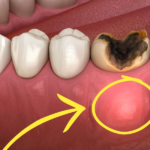
A cavity can cause sensitivity to cold, hot or sweet foods.
Early tooth decay may not cause any symptoms, but as it progresses, the affected tooth can become increasingly sensitive.
If only one tooth has recently become sensitive, particularly if the sensitivity is getting worse, a dental examination is a good idea.
A sensitive toothpaste cannot remove decay. If a cavity is responsible, the decay itself needs to be treated.
A cracked tooth
A crack can make a tooth sensitive to temperature and sometimes painful when you bite.
The crack may be difficult to see, particularly if it is small or located in a part of the tooth that is not easily visible.
You may notice that one particular tooth reacts to cold or hot foods, or that it hurts when chewing.
Treatment depends on the location and extent of the crack. A dentist needs to assess the tooth before deciding whether it can be restored and what type of treatment is appropriate.
Gum disease
Sensitivity and gum problems can occur together.
As gum disease progresses, the gums can become inflamed and may eventually recede, exposing areas of the tooth root.
Look out for symptoms such as bleeding while brushing, swollen or tender gums, persistent bad breath or changes in the position of the gums.
If these symptoms are present, treating the gums is just as important as managing the sensitivity.
Recent dental treatment
Temporary sensitivity can sometimes occur after dental treatment, including fillings and professional cleaning.
The sensitivity may settle as the tooth and surrounding tissues recover. However, if it is severe, persistent or becoming worse, contact your dentist rather than assuming that it is normal.
This is particularly important if you develop pain when biting, prolonged sensitivity or spontaneous pain.
Why Are My Teeth Sensitive to Cold?
Cold sensitivity is probably the symptom most people associate with sensitive teeth.
You may experience a quick, sharp sensation when drinking cold water or eating ice cream. This can happen when dentine or a tooth root becomes exposed.
But cold sensitivity alone does not tell you exactly what is wrong.
If several teeth experience brief sensitivity, exposed dentine, enamel wear or gum recession may be possible explanations.
If one tooth suddenly becomes very sensitive, particularly if the pain lingers after the cold food or drink is gone, your dentist should check for other causes such as decay, a crack or irritation of the pulp.
The duration of the pain is often just as useful as the trigger.
Why Do My Teeth Hurt With Hot or Sweet Foods?
Hot foods and drinks can trigger sensitivity when dentine is exposed, but sensitivity to heat can also occur with problems affecting the inner part of a tooth.
Sweet foods may trigger pain when dentine is exposed, but they can also cause discomfort in a tooth affected by decay.
This is why the trigger alone is not enough to diagnose the problem.
Tell your dentist:
- What triggers the pain
- Which tooth or teeth are affected
- How quickly the pain starts
- How long it lasts
- Whether it stops immediately
- Whether the tooth hurts when you bite
- Whether there is swelling or gum bleeding
These details can help your dentist decide what needs to be investigated.
Can Tooth Sensitivity Be Stopped?
In many cases, sensitivity can be reduced significantly once its cause is identified.
But there is an important difference between controlling sensitivity and treating its cause.
For straightforward dentine sensitivity, a toothpaste formulated for sensitive teeth may help. Desensitising toothpastes can contain ingredients such as potassium compounds or stannous fluoride that help reduce sensitivity.
If gum recession is exposing the root, your dentist may focus on protecting the exposed area and treating any underlying gum problem.
If decay is responsible, the cavity needs to be restored.
If a cracked tooth is responsible, the tooth may require restorative treatment.
If grinding is contributing to tooth wear, your dentist may recommend measures to protect the teeth.
So, there is no single treatment that works for every sensitive tooth.
What Can You Do at Home to Reduce Sensitivity?
If your sensitivity is mild and there are no other concerning symptoms, a few everyday changes may help.
1. Use a soft-bristle toothbrush
Avoid scrubbing your teeth with excessive pressure.
Place the toothbrush gently against the teeth and gums and use small, controlled movements.
A soft-bristled toothbrush is generally recommended because it can clean the teeth effectively without unnecessary pressure on the gums and tooth surfaces.
2. Try a toothpaste for sensitive teeth
A desensitising toothpaste can help if exposed dentine is responsible for the sensitivity.
Use it consistently rather than expecting the sensitivity to disappear after one or two applications.
If it does not help or the symptoms are getting worse, do not keep changing toothpaste indefinitely. Have the teeth checked.
3. Reduce frequent acidic exposure
If you regularly drink acidic beverages, try to reduce how often you expose your teeth to them.
Water is a better choice for frequent sipping.
You should also avoid brushing immediately after consuming acidic foods or drinks because the enamel can temporarily be softened by acid. Rinsing with water and allowing some time before brushing can be gentler on the tooth surface.
4. Be careful with whitening products
Tooth whitening can cause temporary sensitivity in some people.
If you already have sensitive teeth, it is sensible to speak to your dentist before starting a whitening treatment.
Do not increase the frequency or duration of whitening simply because you want faster results.
If the sensitivity is caused by decay, gum recession or another dental problem, whitening will not solve the underlying issue.
5. Address grinding and clenching
If you grind your teeth, protecting them from continued excessive pressure can be an important part of managing sensitivity.
Your dentist can check for signs of tooth wear and determine whether a custom mouth guard or another approach would be suitable.
What Treatment Might a Dentist Recommend?
The treatment depends entirely on what the examination finds.
- For mild dentine sensitivity, your dentist may recommend desensitising toothpaste, fluoride treatment or changes to your brushing and dietary habits.
- For gum recession or gum disease, treatment may focus on improving gum health and protecting exposed root surfaces.
- For a cavity, the decayed part of the tooth may need to be removed and the tooth restored.
- For a cracked or damaged tooth, treatment will depend on how extensive the damage is. The tooth may require a restoration or other treatment.
- For pulp inflammation or infection, root canal treatment may be necessary in appropriate cases.
- For grinding or clenching, the focus may be on reducing further damage and protecting the teeth.
This is why an examination is more useful than simply treating the symptom. Once the cause is clear, the treatment becomes much more straightforward.
When Should You See a Dentist for Sensitive Teeth?
Mild sensitivity that occurs occasionally may not require urgent attention.
However, arrange a dental examination if your sensitivity:
- Keeps returning
- Is becoming more intense
- Suddenly affects one tooth
- Continues after the hot or cold trigger is removed
- Causes pain when biting
- Occurs with swollen or bleeding gums
- Comes with a cracked or chipped tooth
- Appears alongside visible decay
- Does not improve with appropriate home care
Persistent tooth pain should not be ignored. The NHS recommends seeing a dentist when a toothache lasts more than two days or when symptoms such as pain when biting, swelling, fever or a bad taste occur.
You should also seek prompt dental care if sensitivity is becoming progressively worse rather than better.
When is sensitivity an emergency?
Simple sensitivity is not usually an emergency.
However, severe swelling of the face, mouth, throat or neck can be a sign of a serious dental infection.
If swelling makes it difficult to breathe, swallow or speak, seek emergency medical care immediately.
Do not wait for the sensitivity to settle if these symptoms occur.
How Can You Prevent Tooth Sensitivity?
You cannot prevent every case of sensitivity, but protecting your enamel and gums can reduce the risk.
Brush twice a day with fluoride toothpaste and clean between your teeth every day. Use a soft-bristled toothbrush and avoid aggressive brushing. Regular dental examinations can also help identify decay, gum problems, worn restorations and other issues before they become more difficult to manage.
Be mindful of how frequently your teeth are exposed to acidic drinks and foods. If you grind or clench your teeth, discuss it with your dentist. And if you are planning to whiten your teeth, get professional advice if sensitivity is already a problem.
Most importantly, do not assume that sensitivity is simply something you have to live with.
So, What Do We Learn From This?
Tooth sensitivity usually feels like a short, sharp pain triggered by cold, hot, sweet or acidic foods and drinks. It often occurs when dentine becomes exposed because of enamel wear or gum recession. However, tooth decay, gum disease, cracks, grinding and recent dental treatment can also cause sensitivity.
For mild sensitivity, using a toothpaste designed for sensitive teeth, brushing gently with a soft-bristled toothbrush and reducing frequent exposure to acidic foods and drinks may help. But these measures are not a substitute for treatment when an underlying dental problem is responsible.
Pay particular attention if the sensitivity is new, affects only one tooth, lasts after the trigger is removed, hurts when you bite or occurs alongside swelling, bleeding gums or visible damage.
The most effective way to stop persistent sensitivity is to identify what is causing it first. Once the cause is known, your dentist can recommend the appropriate treatment instead of simply managing the pain.
If you are struggling with persistent or unexplained tooth sensitivity, Smile Town is a trusted dentist in Kolkata where your teeth and gums can be examined and the appropriate treatment can be planned according to the cause.